Alessia Moroni, MITUR
Industry leaders, policymakers, tourism professionals and Destination Management Organisations (DMOs) gathered in Brussels from January 26 to 28 for a series of interconnected events shaping the future of sustainable and data-driven tourism in Europe.
European Tourism Day: charting tomorrow’s tourism
The inaugural European Tourism Day, hosted by Commissioner Apostolos Tzitzikostas, brought together public and private stakeholders to explore how Europe can strengthen the sustainability and competitiveness of its tourism sector. Sessions addressed sustainability transitions, artificial intelligence, data accessibility, and the upcoming EU Strategy for Sustainable Tourism.
Commissioner Tzitzikostas emphasized that tourism represents approximately 10% of the EU’s GDP, positioning it as a cornerstone of European competitiveness. The emerging strategy rests on five pillars: competitiveness and sustainability, workforce enhancement, data and technology, the global positioning of the EU as a premier destination and Europe’s international leadership in tourism policy.
A session on data accessibility, moderated by DG MOVE, featured D3HUB project coordinator Dolores Ordoñez alongside experts from UN Tourism and Mastercard. The discussion highlighted that, while data interoperability and accessibility remain fundamental challenges, the emerging Tourism Data Space – supported by D3HUB and DEPLOYTOUR – is expected to offer shared standards, governance approaches and capacity building to help destinations turn data into operational value.
D3HUB’s cross-cluster meeting: empowering the DMOs
On the morning of January 27, the DMOs involved in D3HUB met for the final cross-cluster session of the pilot phase. This session provided an opportunity for peer learning and knowledge exchange with researchers and practitioners.
Four distinguished speakers delivered sessions addressing pressing challenges: Astrid Dickinger (MODUL University) explored behavioral nudging strategies for sustainable tourism transitions; Joao Martins (UNINOVA Lisbon) tackled AI-based visitor flow management and identified critical data infrastructure gaps; Tina Šegota (University of Maribor) presented research on residents’ involvement in sustainable tourism; and Ko Koens (Inholland University) shared practical insights on activating regenerative tourism approaches. The exchange helped translate high-level priorities into approaches that destinations can realistically apply in their own contexts.
Partners’ meeting: planning the next phase
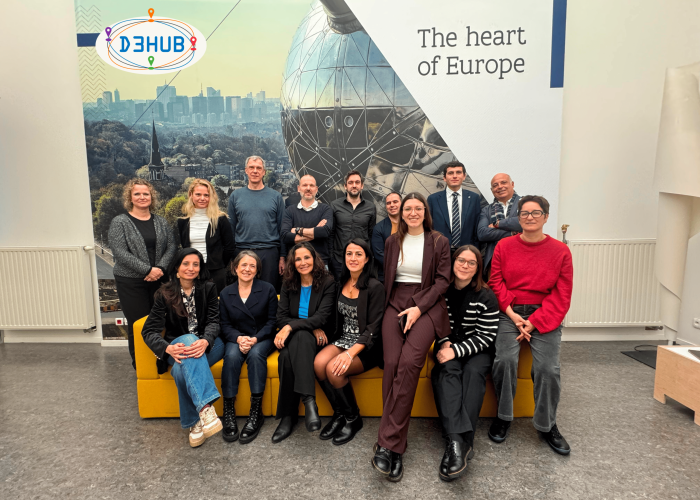
The partners’ meeting on 27-28 January looked beyond the pilot phase and discussed the future development of the D3HUB Competence Center. Conversations addressed the evaluation of the pilot phase results, the use of data for tourist-flow forecasting, dashboard tools for monitoring, and a discussion on crucial elements for establishing the Competence Center’s operational framework.
Looking ahead
These three days in Brussels demonstrated the power of collaboration in shaping the future of European tourism. From high-level policy discussions to practical knowledge exchange and strategic planning, the events highlighted how data-driven approaches, sustainability principles and community involvement are converging to create a more adaptive and responsible tourism ecosystem across Europe.